

Key Elements in Artistic Portraits That Capture Essence

Capturing a person's essence in an artistic portrait takes more than technical skill. It requires understanding which visual elements communicate authenticity and personality. Gaze, light, body language and composition can reveal a subject's essence and personality, but only when they are chosen and combined intentionally. This article breaks down the essential ingredients that turn a conventional portrait into an image that reveals the soul of the person in front of the camera. You will learn how to assess, select and apply these elements to create portraits that truly communicate.
Table of Contents
- Key elements in artistic portraits: main takeaways
- Criteria for evaluating elements in artistic portraits
- Gaze and body language: connection and personality
- Lighting in artistic portraits: techniques and effects
- Composition and symbolism: structuring the visual message
- Explore artistic portraits with arnds.photos
- What elements enrich an artistic portrait?
Key elements in artistic portraits: main takeaways
| Point | Details |
|---|---|
| Gaze and catchlights | Sharp eyes with visible reflections create immediate emotional connection and a sense of life |
| Lighting techniques | Rembrandt, Loop and High Key shape character through depth and controlled drama |
| Authentic body language | Natural, comfortable poses reveal genuine personality more clearly than forced direction |
| Strategic composition | The rule of thirds and neutral backgrounds remove distractions and guide attention to the subject |
| Visual symbolism | Traditional elements add layers of meaning and enrich the portrait narrative |
Criteria for evaluating elements in artistic portraits
Every decision inside an artistic portrait affects how the viewer sees and connects with the subject. Before you press the shutter, you need a clear framework for deciding which elements belong in the frame and how they should work together. This is not about applying formulas blindly. It is about understanding the effect each visual choice creates.
The gaze functions as the primary focal point. Sharp eyes with catchlights and a natural pose communicate more than 80% of nonverbal meaning, so your first technical decision should be to guarantee absolute precision in that area. A portrait can survive minor imperfections elsewhere, but unfocused eyes destroy emotional connection immediately.
Light defines the emotional character of the entire image. Hard light from above introduces tension and drama, while soft frontal light creates closeness and accessibility. Decide which emotion or atmosphere the portrait should carry and choose the lighting setup that supports it. Technique matters, but intention comes first.
Body language reveals personality more honestly than any directed facial expression. Watch how your subject moves naturally, which gestures return again and again and how they hold themselves when they are relaxed. These signals show which poses will reinforce authenticity instead of contradicting it.
Composition removes what is unnecessary. Your job is not to fill the frame but to remove whatever does not help reveal the person. A neutral background, generous but deliberate negative space and careful placement within the frame create clarity. If a portrait photographer in Palma manages to capture essence, it is because they had the discipline to eliminate distraction.
Professional tip: Before each session, define three words that describe the subject's personality. Use those three words as a filter for every technical decision during the shoot.
Symbolism adds narrative depth when it is used precisely. An object, a colour or a texture can anchor meaning and strengthen the subject's story. But forced or generic symbolism weakens the portrait. Include symbolic elements only when they are genuinely connected to the person you are photographing.
Essential evaluation criteria:
- Are the eyes perfectly sharp, with visible catchlights?
- Does the lighting reinforce the emotion you want to convey?
- Does the pose reflect how the subject naturally moves?
- Is there anything in the frame that distracts from the person?
- Does every visual element help reveal personality?
Gaze and body language: connection and personality
The eyes establish presence. A portrait without a sharp gaze is a technical document, not a human revelation. Catchlights, the small reflections of light in the eyes, make the difference between a subject who feels alive and one who feels flat. Technically, they appear when you place a light source in front of or slightly above the face.
Natural facial expression makes genuine connection possible. Pose and body language transmit emotion and personality, which is why real connection with the subject is essential if authenticity matters. Directing a specific expression almost always creates stiffness. Creating a space where the subject feels safe allows organic expression to surface.
If you want authentic posing, observe before you direct. Talk before you start shooting. Notice what the person does with their hands while speaking, how they tilt their head while listening and which posture they take when fully at ease. Those are the poses worth photographing, not the ones recycled from generic tutorials.
Emotional connection is not optional if your goal is real essence. A camera records tension, discomfort and disconnection with the same precision it records truth. Take time to understand what motivates your subject, what they value and what they want their image to say. That information guides everything that follows.
Professional tip: Keep the conversation flowing during the session. Silence often creates self-consciousness and rigidity. Talking about topics that matter to the subject encourages natural expressions that you can capture almost unnoticed.
Exercises that improve interaction:
- Ask the subject to tell you a personal story while you shoot
- Show a few early images on the screen to build confidence
- Use music that matches the subject's personality
- Allow regular breaks to release accumulated tension
Nonverbal communication dominates portraits. More than 80% of portrait communication is nonverbal through natural pose, which means your ability to read and capture body language determines success more than any camera setting. A well-made studio portrait in Palma catches the moment when the person forgets the camera and simply exists.
Lighting in artistic portraits: techniques and effects
Light does not just illuminate, it sculpts. Every lighting technique creates a specific emotional and visual effect. Key portrait lighting setups such as Rembrandt, Loop, Split, Butterfly and High Key create depth, drama or softness. Choosing the right one depends on which part of the subject's personality you want to reveal.
Rembrandt lighting creates a triangle of light beneath the eye opposite the main source, producing depth and classical drama. It works especially well for introspective personalities or when you want a serious, contemplative tone. Place your key light at roughly 45 degrees to the subject and slightly above eye level.
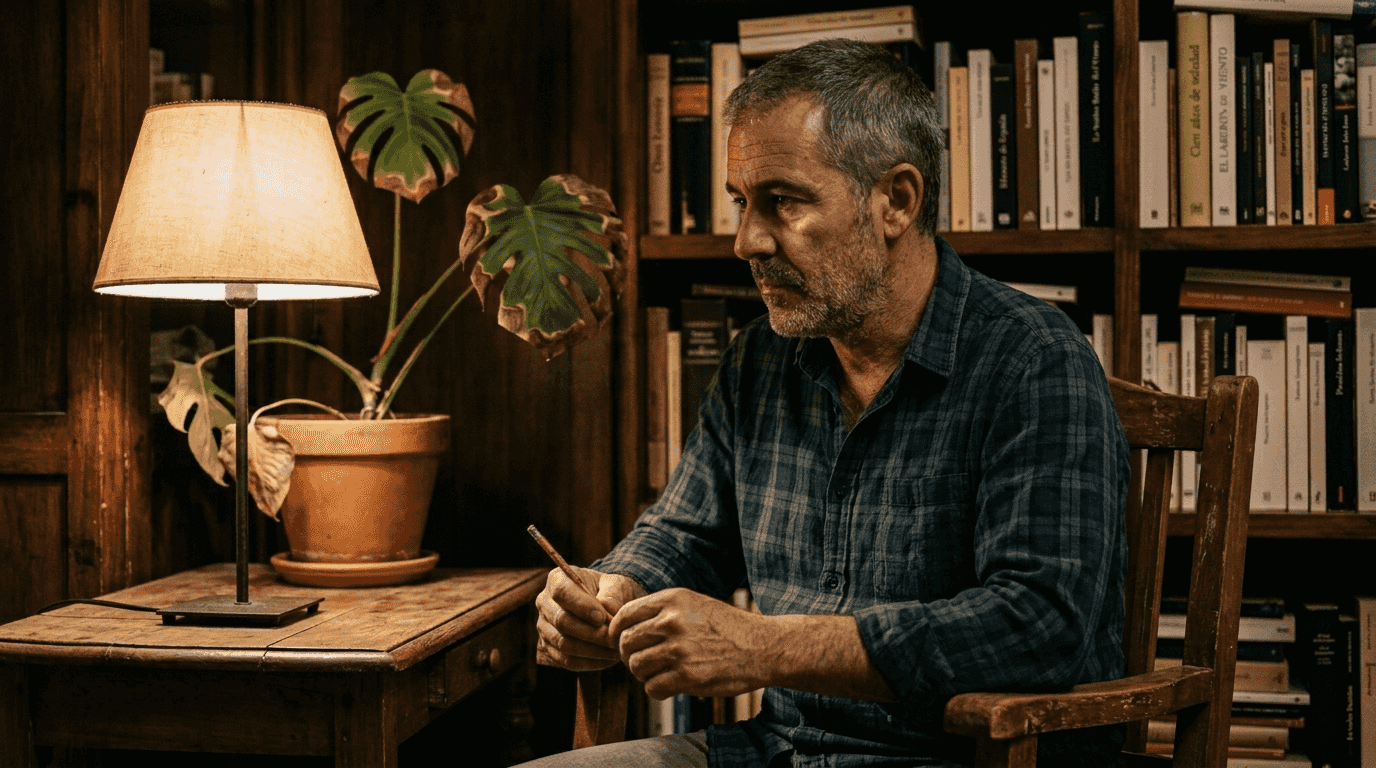
Loop lighting creates a soft nose shadow that falls toward the cheek without touching the corner of the mouth. It is versatile, flattering for most faces and communicates warmth without losing dimensionality. That makes it ideal for corporate portraits or situations where you want a balance between professionalism and approachability.
Split lighting divides the face into halves of light and shadow, creating the strongest possible contrast. Use it when you want to emphasise duality, mystery or inner tension. It is not flattering for every face, but when it works, the visual impact is immediate.
High Key lighting uses abundant, soft light to remove most shadows and create bright, optimistic images. It is ideal for portraits that communicate joy, youth or lightness. It usually requires multiple light sources or large modifiers to soften the shadows completely.
| Technique | Emotional effect | Best use |
|---|---|---|
| Rembrandt | Drama and classical depth | Introverted or serious personalities |
| Loop | Warmth balanced with professionalism | Versatile corporate portraits |
| Split | Strong contrast and mystery | Emphasising duality or tension |
| Butterfly | Glamour and facial softness | Faces with defined structure |
| High Key | Brightness and optimism | Communicating joy or youthfulness |
The ideal 3:1 light ratio for normal contrast, moving toward 4:1 for more softness gives you precise control over facial modelling. A 3:1 ratio means the lit side is three times brighter than the shadow side, producing visible but still gentle contrast. Increase it for more drama or reduce it for a flatter result.
Lens choice affects the look of light just as much as light direction does. An 85mm lens at f/1.4 to f/2.8 creates a creamy bokeh that isolates the subject and softens the background, strengthening focus on the person. Smaller apertures keep more of the environment sharp, which is helpful when context itself adds meaning.
Professional tip: Use a silver or white reflector as your fill before adding a second powered light. You can control the intensity simply by moving it closer or farther away, and the result often feels more natural than a second flash.
Side lighting can slim wider faces visually, while soft frontal lighting balances long or oval faces. The technique should adapt to the subject, never the other way around. A studio photography workshop helps you practise these setups until they become intuitive.
Composition and symbolism: structuring the visual message
The rule of thirds works because it reflects how the human eye scans an image. Placing the subject's eyes in the upper third creates natural balance and gives the gaze room to breathe. It is not an absolute rule, but breaking it should happen with intention and with a visual reason.
The background should disappear. Composition built on the rule of thirds, careful framing, a non-distracting background and symbolic elements guides the eye and adds depth. A background that competes for attention destroys the purpose of a portrait. Neutral, blurred or tonally simple backgrounds allow the person to dominate the image. Darkness is not emptiness. It is context that isolates and emphasises.
Classical symbolism still matters when it is adapted intelligently. In historical painting, sfumato, perspective and symbolism conveyed virtue and status. Those ideas still inform contemporary portrait photography. A book in the hands of a scholar, a tool in the hands of a craftsperson or a musical instrument with a musician can ground identity when those objects belong naturally to the story.
But forced symbolism reads as empty decoration. Include only objects that truly connect to the subject's life. The strongest symbol is invisible as a symbol and obvious as a truth about the person.
Perspective creates three-dimensional depth inside a two-dimensional medium. Shooting slightly above eye level lengthens the neck and slims the face. Shooting from below increases presence and authority. Shooting exactly at eye level creates neutrality and equality. Each angle communicates a specific relationship between subject and viewer.
Essential compositional tools:
- Place the eyes in the upper third of the frame
- Leave space in the direction the subject is looking
- Remove any background element that adds no relevant context
- Use natural lines in the environment to guide the viewer to the face
- Maintain a thoughtful proportion between subject and negative space
| Compositional element | Function | Practical application |
|---|---|---|
| Rule of thirds | Natural visual balance | Eyes in the upper third |
| Negative space | Breathing room and direction | More space toward the subject's gaze |
| Neutral background | Removing distractions | Black, grey or strongly blurred |
| Perspective | Relationship between subject and viewer | Deliberate camera height |
The difference between photography and Renaissance painting is time. A painter could combine multiple sittings into one ideal composition. A photographer captures an unrepeatable instant. That is not a limitation. It is the essence of the medium. Your composition has to work in that fraction of a second, not in a synthesis of hours. Learn from tips on creative portraits that break convention without losing coherence.
Professional tip: Before you press the shutter, identify the single most distracting element in the frame. Move the subject, change your angle or adjust focus until that element disappears or becomes irrelevant.
Explore artistic portraits with arnds.photos
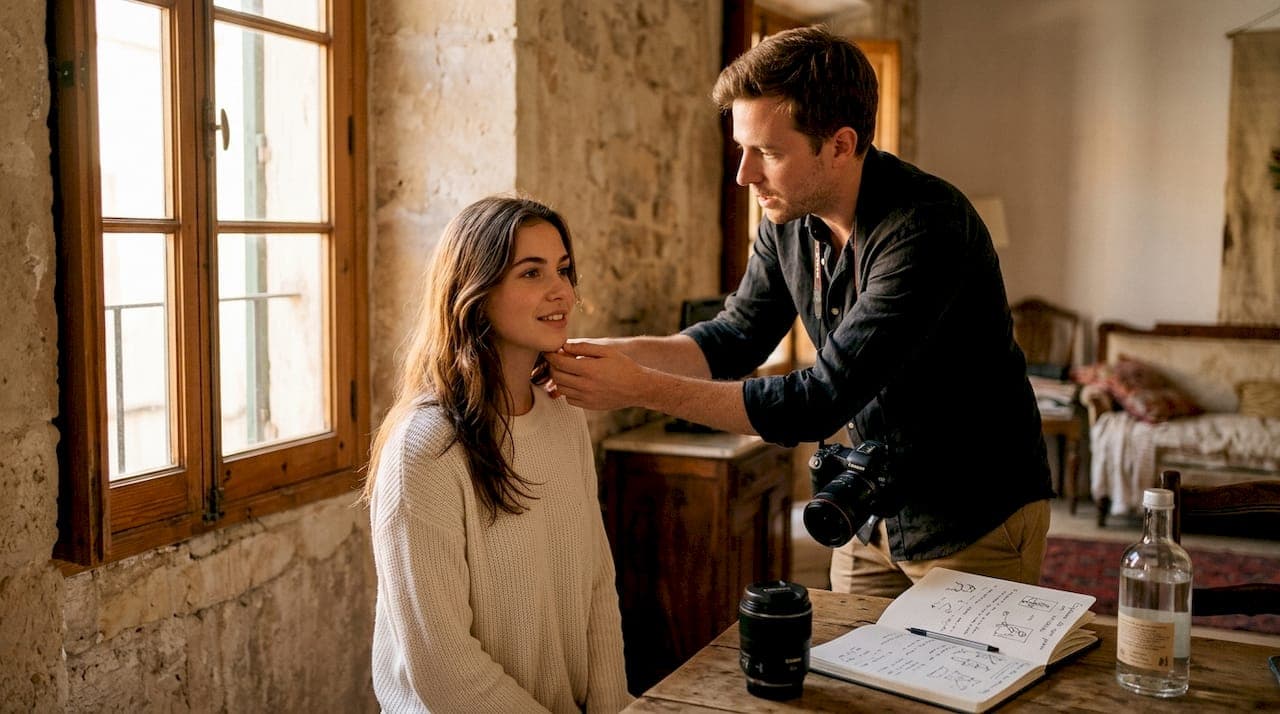
Mastering these elements takes deliberate practice and informed feedback. Taking part in professional portrait sessions in Palma allows you to see these ideas applied under the guidance of photographers with proven experience in capturing essence and personality. Watching how a professional makes real-time decisions about light, composition and direction accelerates your progress far more than theory alone.
Studio photography workshops offer a controlled environment where you can experiment with Rembrandt, Loop and other lighting setups without the unpredictable variables of an outdoor location. Working with real models, receiving direct feedback and adjusting your approach based on tangible results builds real skill. Over time, your portfolio begins to show not only technical ability but a deeper understanding of how to reveal what matters most in front of the camera.
What elements enrich an artistic portrait?
How do you choose the right light for the subject's personality?
Start by asking whether the person feels extroverted or introspective. Open and energetic personalities often respond well to High Key or Loop lighting because both communicate warmth. Reflective or serious people may benefit more from Rembrandt or Split lighting, which adds depth and contemplation. Light should reinforce who the subject is, not work against that identity.
How can you encourage natural, authentic expressions?
Keep a real conversation going during the session about topics that genuinely interest the subject. Avoid directing facial expressions too specifically. Instead of saying "smile," tell a funny story or invite the person to remember a meaningful moment. Authentic expression appears when the subject forgets the camera and focuses on the conversation.
What simple ways improve composition without advanced gear?
Use neutral backgrounds or blur the background completely by opening your aperture. Place the subject's eyes in the upper third of the frame. Remove distracting objects simply by changing your shooting angle. Leave space in the direction the subject is looking so the frame can breathe. None of these choices cost money, but all of them improve the result.
Why are small details such as catchlights so important?
Catchlights are the difference between eyes that feel alive and eyes that feel dull. Those small reflections add brightness and dimension that the human brain reads as presence. Without catchlights, even a technically strong portrait can feel flat. Make sure you always have at least one frontal or side light source that creates that visible reflection.
Which compositional mistakes weaken a portrait most?
Cluttered backgrounds that compete with the subject. Cutting off important joints such as wrists or ankles at the frame edge. Centering the subject too rigidly without giving the gaze room to move. Including objects with no narrative purpose that only create visual noise. The strength of a portrait often depends on what you had the discipline to leave out.
How do you know whether a portrait really captures essence?
Show the image to someone who knows the subject well. If they recognise not only the face but also the person's energy, habits and unmistakable way of being, then essence is present. A strong portrait reveals something true that goes beyond physical appearance. If the image could belong to anyone, it is only a record of a face.
Recommendations
Comments (0)
No comments yet. Be the first!
Leave a comment
More Posts
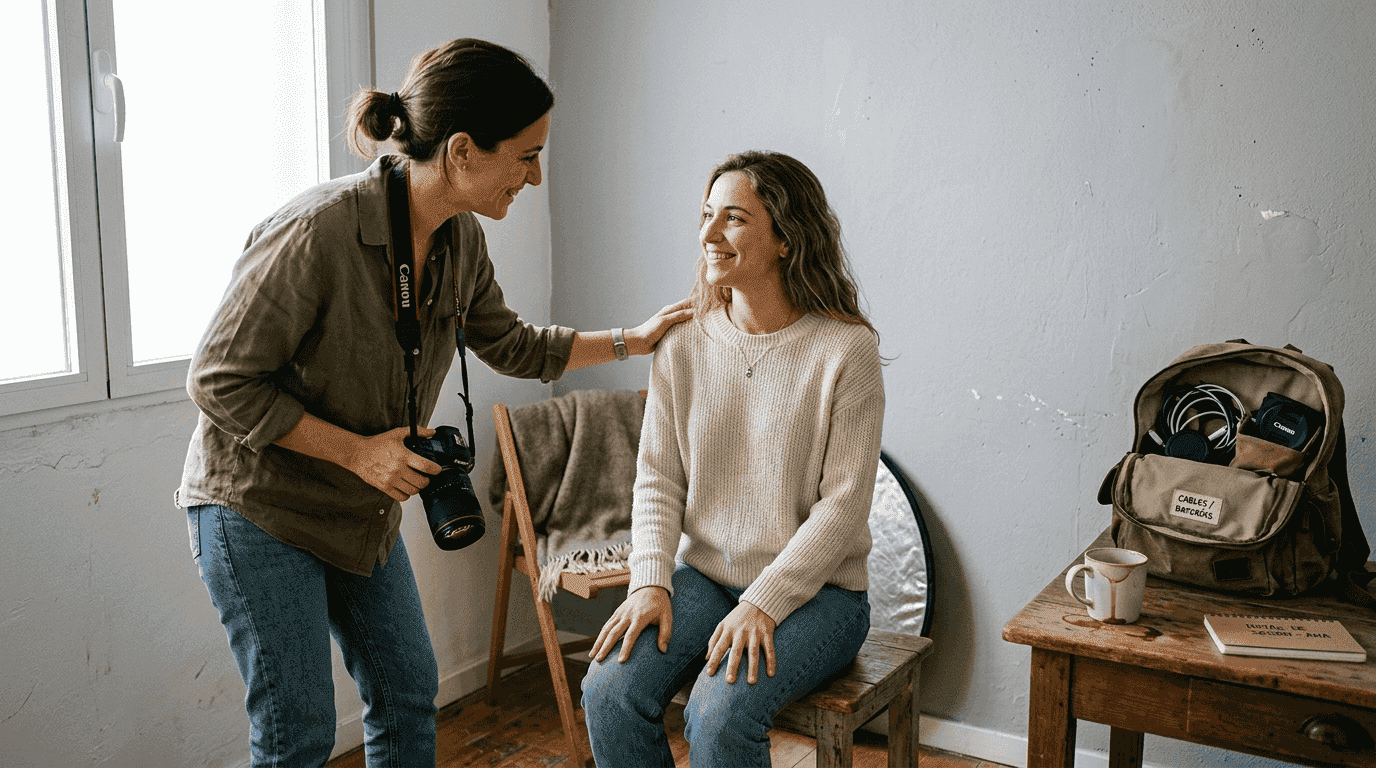
The Photographer's Role in Authentic Portraits 2026
Discover how a photographer in Palma captures authentic essence through emotional connection, technical precision and Mallorca's distinctive Mediterranean light.
How to Create Artistic Portraits That Capture Essence in 2026
Learn how to create artistic portraits that capture authentic essence: lighting techniques, connection with the subject, and balanced post-processing in 2026.