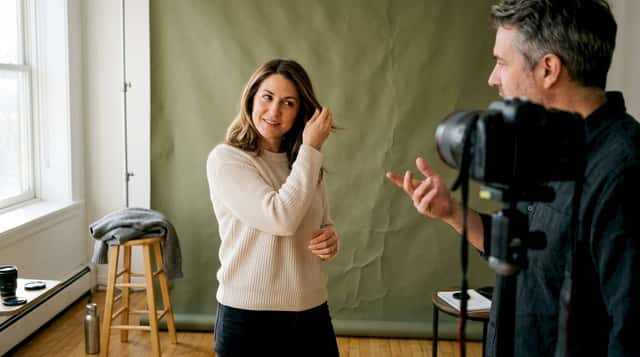

Avoid mistakes in business portraits and highlight your identity

The professional image of a company is not just a photograph. It is the first visual handshake you receive before someone reads a single word about you. In Palma de Mallorca, where local identity and emotional connection have real weight in business decisions, a poorly executed corporate portrait can erode trust before any conversation begins. What’s more troubling is that the most damaging mistakes are often the most invisible: excessive retouching here, an outdated photo there, a careless framing in the final export.
Table of contents
- Editing errors and excessive retouching
- Use of outdated or low-resolution photos
- Technical errors in capture and export
- The importance of preserving authenticity and emotional connection
- Our vision: authenticity before perfection
- Your authentic corporate portrait in Palma de Mallorca
- Frequently asked questions about corporate portraits
Key Points
| Point | Details |
|---|---|
| Naturalness generates trust | Avoiding excessive retouching in corporate portraits enhances authenticity and improves professional perception. |
| Quality and update | Using recent and high-resolution photos is essential to accurately represent the company's identity. |
| Technical errors affect image | Proper framing and export are essential for an impactful portrait that works in various formats. |
| Emotional and artistic connection | Portraits that convey emotions create a stronger bond and differentiation in the business environment of Palma. |
Editing errors and excessive retouching
Now, let's explore how editing can affect the perception of your company.
When I talk about excessive retouching, I mean that set of digital adjustments that, applied indiscriminately, turn a real face into something resembling a wax figure. The skin loses texture. The eyes lose depth. The expression freezes into a mask of artificial perfection. It’s what we in the industry call the doll effect, and it’s more common than you might think in corporate portraits.
The excessive retouching in images is one of the most common photo editing mistakes, and its consequences go beyond the aesthetic. When a potential client sees your portrait on LinkedIn, on your website, or in a presentation, their brain unconsciously processes whether the person they see seems real and approachable. An over-edited image triggers a subtle alarm signal: something doesn’t fit. And that discomfort, even if the observer cannot name it, directly affects their perception of trust.
How can you identify if your portrait has fallen into this trap? Look for these indicators:
- Completely uniform skin, with no visible texture or pores.
- Eyes with artificial shine, as if they were lit from within in an unnatural way.
- Facial contours smoothed to the point of losing real bone structure.
- Frozen expression, without the micro-gestures that make a face appear alive.
- Desaturated or uniform skin colors that eliminate the natural tone.
The impact of these mistakes is not negligible. The professional photography in businesses shows that authentic images generate more engagement and a greater perception of credibility than images with aggressive editing. Clients and partners want to see the real person they are going to work with, not an idealized version that they won’t recognize in person.
The solution is not to abandon editing but to use it wisely. The artistic editing in portraits seeks exactly that balance: correcting minor imperfections, adjusting light and color to make the image visually appealing, but without sacrificing genuine expression or the natural texture of the face.
"Naturalness is not carelessness; it is precision. Knowing how far to go with retouching is as important as knowing what tool to use."
Professional tip: Before approving an edited portrait, print it out or show it on screen to someone who knows you in person. If that person does not recognize you immediately or says "you look different," the retouching has gone too far.
The goal of any well-executed editing is for the portrait to look like you at your best moment, not like someone else.
Using outdated or low-resolution photos
After addressing retouching, let’s look at the importance of using current and sharp portraits.
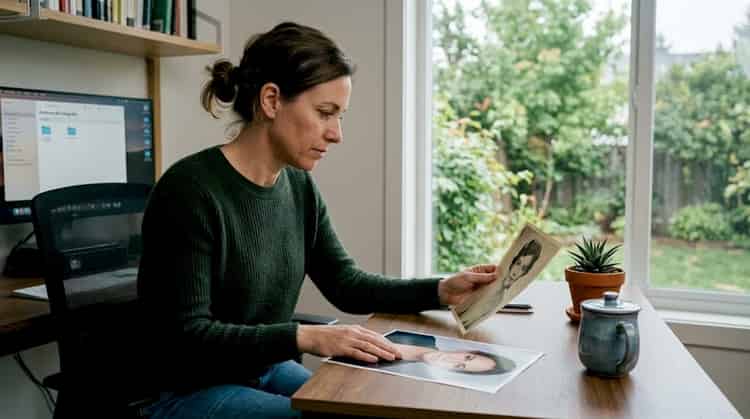
There is an error that many companies make without being aware of it: continuing to use the same corporate photo for years. It may have been an excellent image at the time. But if three, five, or more years have passed, that photograph no longer represents the person or the company you are today. The use of old or low-resolution photos is one of the most common mistakes in corporate portraits, and its impact can be more serious than it seems.
How can you tell if your photo no longer represents you? There are clear signs:
- Your physical appearance has changed significantly (hair, weight, style of dress).
- The image has a visual style that no longer fits the current identity of your brand.
- The resolution is not sufficient for printing or viewing on modern high-density screens.
- The photo was taken with a mobile phone or in poor lighting conditions.
- The background or clothing shown in the image no longer corresponds to your current professional context.
Resolution is a technical factor with direct consequences on perception. A pixelated or blurry image on your company’s website or in your presentation materials conveys carelessness. In contrast, a crisp, well-lit image with resolution suitable for all formats communicates attention to detail and professionalism. Well-executed branding photography can make a tangible difference in how new contacts perceive your company.
| Aspect | Outdated Photo | Updated Portrait |
|---|---|---|
| Physical Representation | Does not reflect current appearance | True to the present image |
| Resolution | Insufficient for web/print | Optimal for all formats |
| Visual Style | Disconnected from the current brand | Aligned with corporate identity |
| Emotional Impact | Generates distrust or confusion | Conveys coherence and professionalism |
| Connection with the Client | Distant or artificial | Close and authentic |
The key is to understand that updating a portrait does not mean losing the artistic style that defines your image. On the contrary, it is an opportunity to reinforce the identity in corporate portraits with a more mature vision that is coherent with your company’s current moment.
There is an important difference between technical quality and emotional representation. You can have an image that is technically perfect in terms of resolution and sharpness, but that conveys nothing. And you can have an image with impeccable technique that also captures something genuine in expression, posture, and gaze. The goal is to achieve both dimensions at the same time.
Technical Mistakes in Capture and Export
Technical quality is another fundamental pillar for highlighting the professional image.
Technical errors in corporate photography are, paradoxically, the easiest to avoid and the most frequently encountered. They are not always due to lack of equipment, but rather a lack of judgment at the moment of capture or in the final export process. Technical errors such as loss of quality in export or careless framing are problems that appear even in studios with professional equipment when there is no clear process.
These are the most common technical errors I observe in corporate portraits:
- Incorrect framing: Cutting off body parts in unnatural places (at the wrists, at the elbows) or leaving too much empty space around the subject without compositional intent.
- Flat or harsh lighting: Front light without modeling creates faces without depth. Light that is too harsh generates aggressive shadows that distort the expression.
- Distracting background: Elements in the background that visually compete with the subject, breaking the visual hierarchy of the portrait.
- Exporting with excessive compression: Reducing the file size to the point where the image loses sharpness, especially noticeable at the hair edges and in fine facial details.
- Incorrect format for intended use: Using low-quality JPEG for printing, or files that are too large for web use, affecting loading speed.
The studio portrait guide details how to address each of these points from the session planning phase. But it is also useful to understand the differences between export formats to make informed decisions:
| Format | Recommended use | Advantages | Limitations |
|---|---|---|---|
| High-quality JPEG | Web and social media | Reduced size, compatible | Quality loss with compression |
| PNG | Web with transparent background | No visible loss | Larger files |
| TIFF | Professional printing | Maximum quality | Very large files |
| WebP | Modern web | Good quality and reduced weight | Not compatible with all systems |
The visual quality in portraits does not end at the moment of shooting. It is also built in the export phase, where many projects lose part of the work done during the session.
Professional tip: Always request the files in at least two formats: one optimized for web (JPEG or WebP at 72 dpi) and another for printing (TIFF or JPEG at 300 dpi). This ensures flexibility without compromising quality in any use.
Caring for the framing, light, and background from the start of the session is infinitely more efficient than attempting to correct it in post-production. Well-captured photography requires much less retouching, which translates directly into more natural and authentic images.
The importance of preserving authenticity and emotional connection
Finally, authenticity is key to standing out in the business field.
We can talk about technique, resolution, and export formats. But if there is one element that separates a memorable corporate portrait from one that merely fulfills its function, that element is emotional connection. An authentic portrait not only shows how you look physically. It shows who you are, what values you stand for, and the energy with which you present yourself to the professional world.
Experts in corporate photography emphasize naturalness over plastic perfection: minimal retouching preserves identity and generates genuine trust, precisely avoiding the doll-like effect we mentioned earlier. This stance is not just an aesthetic preference; it is a communication strategy with a real impact on how clients and partners perceive you.
Why does emotional connection elevate the corporate portrait? Consider these factors:
- The gaze says it all. A direct, confident, and warm gaze in a portrait generates an immediate trust response in the observer.
- Posture communicates attitude. An open and natural posture conveys accessibility. A rigid or forced posture communicates discomfort, even if the facial expression is correct.
- Context reinforces the message. A portrait taken in an environment related to your professional activity adds layers of meaning that a generic studio photo cannot offer.
- Authenticity builds personal brand. When your portrait genuinely reflects who you are, it becomes a branding tool that works for you in every presentation, proposal, or digital profile.
Look, for example, at how a well-executed corporate portrait conveys authority and approachability at the same time, without the need for artifice. That combination is what companies look for when they understand that their professional image is also their story.
"Companies that opt for authentic portraits not only improve their image but also build stronger relationships from the first visual contact."
Authentic corporate photography has a cumulative effect: each time someone sees your portrait and feels that the person depicted is real and approachable, a small grain of trust is deposited. Over time, these grains form your company's visual reputation.
To convey history and values through the portrait, I recommend working with a photographer who takes the time to get to know you before the session, understands your sector, and knows how to guide you in posing without making the result seem forced. The portraits that capture essence do not happen by accident. They are the result of a conversation, preparation, and an artistic look that knows when to press the shutter.
Our vision: authenticity over perfection
After reviewing mistakes and solutions, I want to share something I've learned after years of portraying companies and professionals in Palma de Mallorca: technical perfection without soul is the most costly mistake you can make.
I have seen impeccable portraits from a technical standpoint that say absolutely nothing about the person in them. And I have seen images with some minor imperfection that convey so much presence and authenticity that they are etched in the memory of those who see them. The difference is not in the equipment or editing software. It lies in the intention.
The current trend towards trendy filters and homogenized edits is concerning because it erases precisely what makes each professional and each business unique. Following those trends without considering one's own essence is a real risk to brand identity. The key elements in portraits that stand the test of time are always the same: genuine expression, light that shapes without being harsh, and a visual narrative coherent with who you are.
My stance is clear: I prefer a portrait that makes you recognizable and approachable rather than one that makes you look perfect but distant.
Your authentic company portrait in Palma de Mallorca
If you are looking for an authentic and artistic portrait, discover our solutions in Palma.
At arnds.photos, we work with businesses and professionals who understand that their visual image is part of their identity, not just a formal requirement. Every session begins with a personalized consultation to understand who you are, what values you want to convey, and how to connect emotionally with your audience.
We offer portraits in Palma both in the studio and outdoors, tailored to each project. If your company needs to renew its image with artistic coherence, our corporate photography Mallorca is the answer. And if you are looking to strengthen your personal brand, our personal branding photographer Palma service is designed just for you. Book your session and start communicating with authenticity.
Frequently Asked Questions about Company Portraits
How can I avoid an artificial appearance in my company portraits?
Opt for minimal and natural retouches that correct without transforming, and avoid filters that standardize the skin or alter the real expression of the face.
Why is it important to update my corporate photos?
Old or low-resolution photos create distrust because they show an outdated version of you, creating a gap between the digital image and the real person that your clients will encounter.
What technical mistakes should I avoid when exporting my portraits?
Avoid excessive compression during export and make sure to deliver the files in the correct format and resolution according to the intended use, always distinguishing between web and print.
How can I convey my company's personality in the portrait?
Work with photographers who prioritize naturalness over plastic perfection, taking the time to understand your corporate identity before the session so that each image tells your story authentically.
Recommendation
Comments (0)
No comments yet. Be the first!