
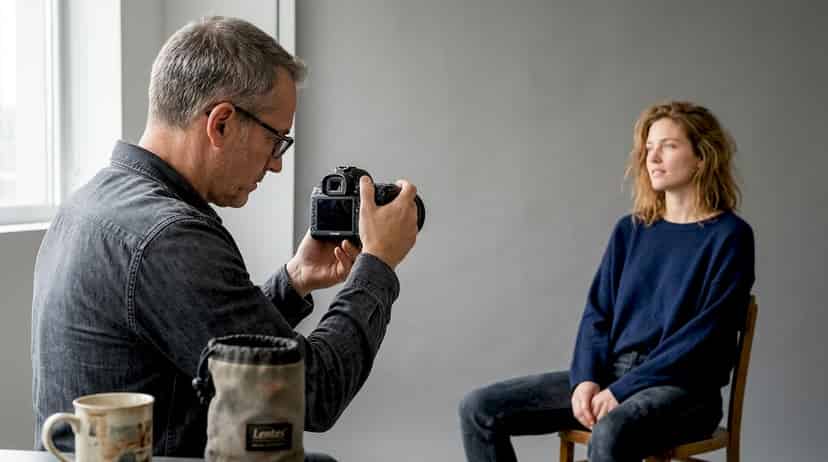
Visual Quality: The Key to Authentic Artistic Portraits
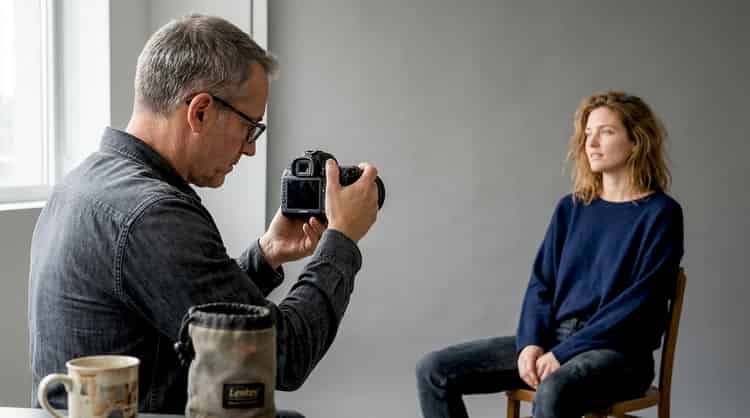
Do you think any professional portrait can convey your true essence? The truth is, not all of them succeed. Visual quality is not just a technical detail: it is the bridge that connects the personality of the subject with the emotion of the observer. Without it, even the best artistic concept can feel empty. In this article, we will explore what technical quality truly contributes, what methodologies make the difference, how viewers perceive those nuances, and why the balance between perfection and visual honesty is what makes a portrait truly memorable.
Table of Contents
- What visual quality adds to artistic portraits
- Key photographic techniques for high-quality portraits
- Viewer perception: authenticity, appeal, and rejection
- Emotional connection: when quality enhances authenticity
- Our perspective: what many overlook about quality in portraits
- The next step: authentic portraits with professional quality in Palma
- Frequently asked questions
Key Points
| Point | Details |
|---|---|
| Visual quality connects | A quality portrait conveys your essence and establishes an instant emotional connection. |
| Technique and emotion go hand in hand | Without technical quality, authenticity fades, but excessive perfection can remove naturalness. |
| The balance is key | Light, focus, and precise tones should be balanced to achieve attractive and genuine portraits. |
| Technical details matter | Well-focused eyes and the right lighting make the difference between rejection and admiration. |
| Your story deserves the best version | Choose photographers who prioritize quality to reflect your authenticity in every portrait. |
What visual quality adds to artistic portraits
Now that we question the importance of quality, let's see how it really impacts the final result. When I talk about visual quality in portraits, I am not just referring to having an expensive camera or a bright lens. I mean the sum of technical decisions that allow an image to breathe and speak for itself.
Sharpness, for example, is not just clarity: it is the ability to show the texture of a gaze, the subtle tension in the lips, or the light that rests on a cheekbone. Those details are what make a portrait stop being a photo and become a visual story. Visual quality in artistic portraits is crucial for highlighting the identity, personality, and emotional essence of the subject.
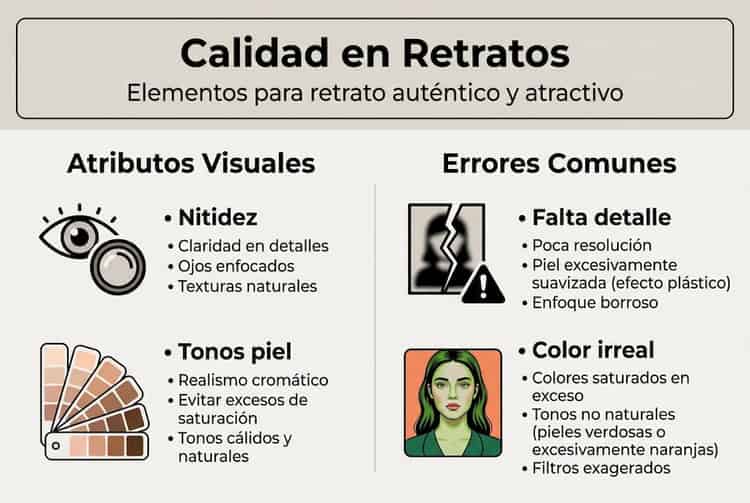
Accurate skin tones are another determining factor. When the color is true to reality, the viewer's brain processes the image as authentic, generating an immediate empathetic response. A deviated skin tone, even if slightly, activates a sense of strangeness that emotionally distances. It is something almost imperceptible consciously, but that the observer feels.
The bokeh, that soft and almost liquid blur surrounding the subject, serves a clear narrative function: it isolates the personality of the portrayed from the environment, forcing the gaze to stop on what matters. When it is well achieved, it sinks into an extremely smooth, almost artificial blur, elevating the image to another expressive level.
The key elements of art in portraits combined with solid technique produce results that go far beyond mere visual documentation. Here are the aspects that most influence:
- Selective sharpness: focuses on the eyes and allows the rest to breathe smoothly.
- Calibrated skin tones: chromatic fidelity that generates perceived authenticity.
- Controlled bokeh: separates subject and background without obvious artifices.
- Balanced contrast: defines volume without losing detail in shadows or highlights.
- Intentional framing: composition directs attention to the essence of the portrayed.
"A quality portrait does not show how someone is, but how someone is when they truly feel seen."
The authentic studio portraits demonstrate that controlling the technical environment does not limit expression: it liberates it. When the technique works in silence, the personality of the portrayed occupies all the space.
Key photographic techniques for high-quality portraits
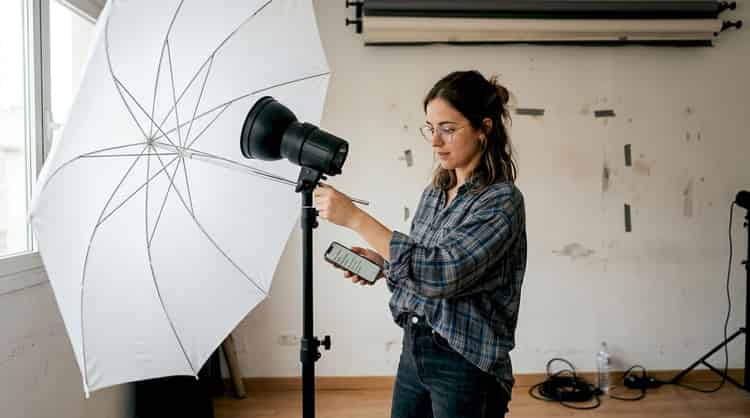
To understand what makes a portrait stand out, we now analyze the fundamental techniques that ensure that excellence. Controlled lighting, focus on the eyes, and balanced composition are key methodologies to achieve high-quality portraits.
Lighting with emotional intention. Rembrandt lighting, with its characteristic triangle under the eye, adds depth and drama. Soft diffused light conveys calmness and closeness. Hard light, when used well, can reveal character and strength. Each lighting scheme tells something different about the person portrayed.
Focus on the eyes with automatic priority. Modern eye detection systems allow the focus to fall exactly where it should: on the iris. It is the emotional contact point between portrait and viewer. If the eyes are slightly out of focus, the connection is broken immediately.
Appropriate aperture and focal distance. Apertures between f/1.4 and f/2.8 with focal lengths of 85 mm to 135 mm generate that natural bokeh that separates the subject from the background without distorting facial features. It is the combination that most closely resembles human visual perception.
Composition based on the rule of thirds. Placing the eyes in the upper third of the frame activates a sense of natural balance. The negative space around the subject is not empty: it is visual breathing.
Honest and restrained editing. Retouching should polish without erasing. Removing temporary imperfections is fine; homogenizing textures or over-smoothing destroys the authenticity that was so hard to capture.
Professional tip: before retouching, ask yourself if what you are about to remove is part of the person's identity. If the answer is yes, leave it. That "imperfection" may be the most powerful detail of the portrait.
| Technique | Emotional effect | Frequent mistake |
|---|---|---|
| Rembrandt light | Depth and character | Too dense shadow |
| Bokeh with f/1.8 | Subject isolation | Focus out of the eyes |
| Rule of thirds | Natural visual balance | Excessive centering |
| Restrained retouching | Preserved authenticity | Excessive skin smoothing |
| Eye focus | Direct emotional connection | Focus on nose or forehead |
If you want to dive deeper into how light transforms your portraits or learn about the steps for studio portraits, you will find detailed guides that complement these principles.
Viewer perception: authenticity, appeal, and rejection
Having clarified the technical foundations, we now explore the role of perception and how a portrait can captivate or repel. Quality matters not only to the photographer: it matters, above all, to the viewer.
Studies on portrait preferences reveal surprising data. In low light or indoor situations, technical quality directly determines user preferences, with clear rejections of faces that are too bright or too dark. The viewer does not consciously analyze technique, but does react to its consequences.
Brightness and contrast are the number one factors in the visual satisfaction of a portrait. An overexposed image on the face triggers an almost instinctive rejection response. An underexposed image generates distrust. Tonal balance is not an aesthetic whim: it is a perceptual necessity.
"The human eye seeks to recognize. When the image technically fails, the brain detects something wrong before the mind processes it."
There is also a curious bias in perception: portraits that show the entire face, well-framed and with even lighting, are perceived as more attractive and generate greater empathy. Portraits with partially cropped faces or with very irregular light zones measurably reduce emotional connection. High technical quality correlates with superior judgments in image quality benchmarks.
Comparing well-calibrated portraits with typical failures makes it clear:
| Characteristic | Well-calibrated portrait | Typical technical failure |
|---|---|---|
| Exposure | Balanced, details in highlights and shadows | Overexposed on cheeks or forehead |
| Skin color | True to natural, warm and vibrant | Desaturated or with a cool cast |
| Sharpness | Precise focus on eyes | Focus on nose or slightly shifted |
| Background | Smooth bokeh, does not distract | Focused background competes with subject |
Custom photography for authenticity is based precisely on this knowledge: understanding how the viewer perceives to make technical decisions that maximize emotional connection from the first glance.
Emotional connection: when quality enhances authenticity
Having understood the observer's reactions, we see how quality is the true bridge to a sincere emotional connection. This is where technique and art merge, or destroy each other.
Technical quality and emotional connection are complementary: without visual quality, the essence is not effectively conveyed, but excessive retouching can homogenize and reduce authenticity. This balance is, in my experience, the greatest challenge of artistic portraiture.
I have seen technically impeccable portraits that do not move anyone. And I have seen images with small imperfections that generate an immediate and profound connection. The difference lies in whether the technique serves the person or supplants them. When retouching erases wrinkles that tell a story, or smooths an expression that defines a character, the portrait loses its reason for being.
Professional advice: artistic editing should enhance what is already in the image, not invent something that did not occur during the session. If you need to add emotion in post-production, it’s a sign that there was a lack of connection during the capture.
These are the good practices I maintain to balance quality and authenticity:
- Capture first, correct afterward. The session is the time to create; the editing, to polish.
- Respect the marks of time. The real textures of the skin are part of the identity.
- Adjust color with fidelity. The tones should evoke the lived reality, not an idealized version.
- Limit retouching to the temporary. A passing blemish yes; a permanent feature, no.
- Review the image with distance. After editing, ask yourself: do I still recognize this person?
The artistic editing of portraits and the principles on how to achieve essence capture in 2026 expand on these ideas with concrete examples and applicable criteria from the first shot.
Our perspective: what many overlook about quality in portraits
After years of working in artistic portraits, I have come to a conclusion that goes against the grain: maximum technical quality does not always produce the best portrait. What produces the best portrait is knowing when the technique should step back and make way for the person.
The most common mistake I see, even in photographers with great technical mastery, is confusing perfection with authenticity. A portrait can have surgical sharpness, perfectly calibrated lighting, and impeccable editing, and still say nothing. Because technique without personal connection is just skill, not art.
What truly elevates a portrait is the combination of visual honesty and technical mastery at the service of the person. Not the other way around. The most memorable artistic portraits I have created were not the most technically complex: they were those in which the person felt seen and understood, and that translated into an expression that no subsequent retouching could have invented.
The next step: authentic portraits with professional quality in Palma
Wrapping up the topic, we show you how to take what you’ve learned into practice with experts in your city. If you’ve made it this far, you already know that visual quality is not a luxury: it is the necessary condition for your portrait to truly represent you.

In Palma de Mallorca, Arnd's portrait service combines technical mastery with a genuine artistic vision, both in the studio and outdoors. Each session begins with a personal consultation to understand who you are and what you want to convey. The result is not just a photograph: it is an image that honestly tells your story with quality. If you want to experience this, you can explore artistic portraits starting from €99 and take the first step towards a portrait that truly reflects you.
Frequently Asked Questions
What differentiates a high-quality portrait from a common one?
Visual quality in artistic portraits is crucial to highlight the identity, personality, and emotional essence of the subject. Precision in sharpness, colors, and lighting allows for capturing authentic emotions that a technically careless portrait cannot convey.
Why do some portraits appear artificial?
Excessive retouching or incorrect lighting removes authenticity, causing the image to lose emotion. Technical quality and emotional connection are complementary: excessive retouching can irreversibly reduce authenticity.
How does quality influence the perception of attractiveness in portraits?
High technical quality correlates with higher judgments on image quality benchmarks. Complete and well-calibrated portraits are perceived as more attractive and generate a significantly greater emotional connection.
What technical parameters are key to the quality of a portrait?
Wide apertures, focus on the eyes, controlled lighting, and skin tone balance are key to achieving professional results. Controlled lighting, focus on the eyes, and balanced composition are the methodologies that have the most impact on the final result.
Recommendation
More Posts
How to Tell Stories in Photos and Create Moving Portraits
Learn to create narrative portraits that convey your true essence. Step-by-step guide on composition, symbolism, and visual storytelling in Palma de Mallorca.

Why choosing an award-winning photographer elevates your portraits
Discover why choosing an award-winning photographer in Palma de Mallorca ensures authentic portraits, greater corporate impact, and protection against artificial images.